PWM vs Analog Dimming: Which to Use for Light Painting
 4 min read
The RGB Critter BT can dim its LEDs two ways: PWM and analog. To your eye they look the same. Inside the light they work in completely different ways. Here's how each one works, what it means for photos and video, and the quirks of switching between them on the Critter BT.
The short version
PWM
Full power, switched fast
The LED flicks on and off many times a second, and the on time sets the brightness. The default mode.
Consistent color
Analog
Steady, lower current
The LED stays on the whole time at a lower current, so a moving light draws a continuous line.
Continuous light
How to switch
In the app
Analog is a setting in the Ants on a Melon app, and the light goes back to PWM when it powers off.
Set it each session
How PWM dims a light
PWM stands for pulse width modulation. Instead of turning the LED down, the light runs it at full power and switches it on and off very quickly. At 50% brightness it's on half the time and off half the time. The switching is far too fast for your eye to follow, so you just see a dimmer light.
It's the most common way to dim an LED because it's simple and it keeps colors consistent: the LED always runs at the same current, so a mixed color looks the same at 10% as it does at 100%.
What a camera records instead
Your eye averages the pulses into a steady glow. A long exposure doesn't average anything: it records the light at every position it passes through, so if the light is moving, the gaps between pulses can show up as gaps in the line. Whether they do depends on the switching speed, the brightness and the tool on the front of the light, since a diffuser like a saber or tube tends to blur the pulses back together.
What analog does differently
In analog mode the Critter BT sets the brightness by lowering the current to the LEDs rather than switching them. Each color channel has its own converter setting the level, so the light stays on continuously and a moving stroke records as one unbroken line.
The trade-off is small but real. LED color shifts slightly as the current changes, so a mixed color at very low analog brightness can look a touch different from the same color at full power. Most of the time you won't notice, but it's the reason PWM remains the default.
Why video is its own case
Video adds a second clock. A camera shooting 24 or 30 frames a second, with a fast shutter, samples the light in short slices. If those slices land at different points in the PWM cycle from frame to frame, the light can appear to shimmer or roll bands across the frame. Analog has no cycle to catch, so if you film with a Critter BT, analog is the safer start.
How to switch on the Critter BT
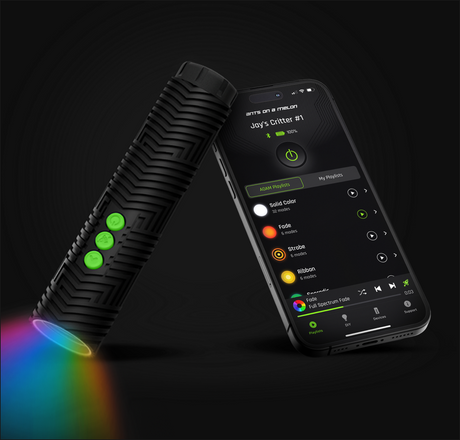
Connect the light to the Ants on a Melon app, open Universal Settings and switch on Analog.

The toggle works live. Flip it on and the light switches to analog straight away; flip it off and it goes back to PWM. Analog is only available while the app is open and connected to the light. Close the app or lose the Bluetooth connection and the light runs its built in modes in PWM. Settings also reset when the light powers off, so after a battery swap or a full shutdown, reconnect and switch analog back on before you shoot. Make it part of your setup routine, the same way you set focus and white balance.
If you're not sure which mode you're in, the app shows it in the settings, so check there rather than guessing from the light.
Related guides
For why colored trails can blow out even at low brightness, see why colored light trails turn white. For the numbers behind color light output, see RGB lumens vs white lumens. And for a starting exposure, our light painting camera settings guide.