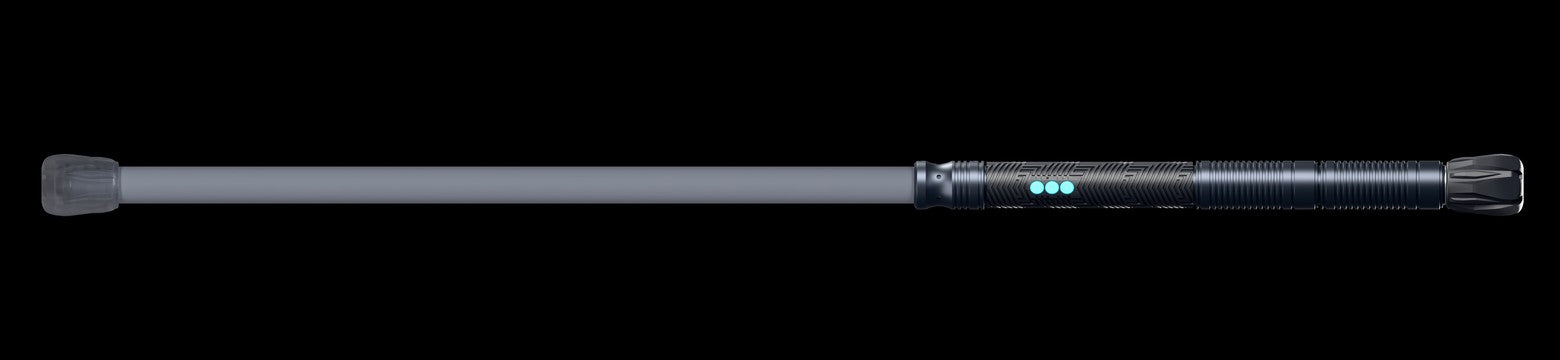
On the 24 inch (61 cm) blade it is a 959 gram contact prop with its mass parked at both ends and its balance point 68.6 cm (27 in) from the tip, right at the buttons. That weighting slows the turn to a rate you can read and keeps small bumps from knocking it around, which is the difference between chasing a roll and riding one.
Full details and specs
Show less
18, 24, 30 or 36 inch blades (39 inches assembled on the 24), 16.7 million colors, and it comes apart into parts we sell individually. Plenty of flow artists call it a contact sword.
Specs, what's included + how it connectsShow less
Specs (24 inch / 61 cm build, calculated from our hand weighed 18 and 36 inch builds; a longer blade adds length and weight and moves the balance toward the tip)
-
Total length: 99.5 cm / 39.2 in
-
Total weight: 959 g
-
Balance point: 68.6 cm / 27 in from the blade tip, 30.9 cm / 12.2 in from the rear cap
-
Blade: Saber Tube in Sol, Honeycomb, Butterfly or Stellar, 18, 24, 30 or 36 in (46, 61, 76 or 92 cm), impact-resistant polycarbonate
-
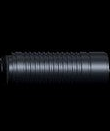
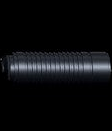
Handle: RGB Critter BT grippy silicone body plus 2x Saber Handle Extension, grooved aircraft-grade aluminum
-
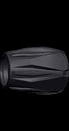
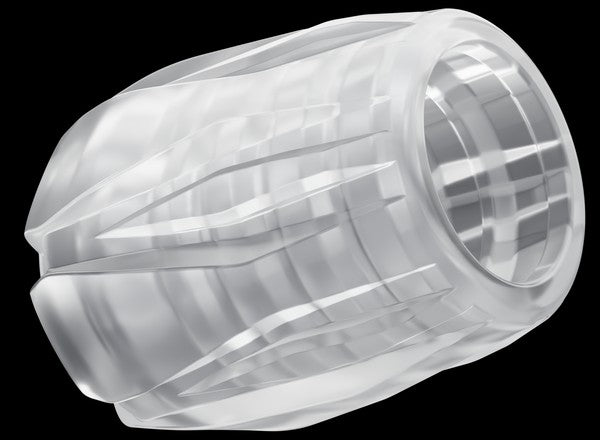
Ends: Silicone Saber Cap (Clear) at the blade tip, Silicone Saber Cap (Black) at the rear, both silicone
-
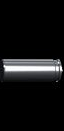
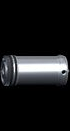
Rear weight: Silicone Cap Counterweight Kit, steel weight in a machined aluminum mount
-
Light: RGB Critter BT over Bluetooth, 142 light modes plus 16.7 million colors in the free Ants on a Melon app
What is in the box
- RGB Critter BT Light Engine
- RGB Critter Tube Adapter - Long, black
- Saber Tube in the pattern and length you choose: Sol, Honeycomb, Butterfly or Stellar, 18, 24, 30 or 36 inch
-
Saber Twist-On Cap, White on Sol and Clear on the other patterns, included at no extra cost
- Silicone Saber Cap (Clear), pushed on over the Twist-On Cap at the blade tip. The two caps stack, they are not an either/or
- Silicone Saber Cap (Black), on the rear
- Saber Handle Extension x2
- Silicone Cap Counterweight Kit
- Every hex key, shim and screw needed to assemble it (2 mm and 4 mm hex keys, PTFE shim, connecting screw, set screws)
Why the ends are heavy
A prop that carries its mass in the middle fights you. Every roll has to be driven, and every bump knocks the turn around. Moving mass out to both ends raises the prop's resistance to a change in rotation, so the turn slows to a rate you can read and small errors change the spin less.
On the 24 inch build the balance point sits 30.9 cm (12.2 in) in front of the rear cap, right where the Critter's buttons are. Grip there and the saber turns around your hand instead of around some point out past your wrist. These numbers come from real builds we weighed and balanced by hand, not from adding up part weights.
What it is made of
The lit section is an 18 to 36 inch (46 to 92 cm) impact-resistant polycarbonate Saber Tube running over an RGB Critter BT. The handle is the Critter's grippy silicone body, right at the balance point where your hand lands, plus two chained Saber Handle Extensions in grooved aircraft-grade aluminum that grip too, which is where the length and most of the handle mass come from. A clear Silicone Saber Cap goes on the blade tip and a black one on the rear, so the parts that meet the floor are the parts designed to.
The rear weight is the Silicone Cap Counterweight Kit: a steel weight that slides into a machined aluminum mount and locks with a set screw. It is the piece doing the actual balancing, and it comes back out if you want to re-tune the feel.
It comes apart, and every part is one we sell
Nothing here is bonded or specific to this build. Every component threads, clamps or press-fits onto the same RGB Critter modular system, so you can change the blade length, swap the pattern, drop a hilt to shorten it, or add a second RGB Critter BT later and join the two into a full LED Staff. This is a starting point, not a sealed product.
Which length? How length and weight change the feelShow less
A longer contact saber turns slower. A shorter one turns faster. Long gives you big, smooth rolls with time to think inside each one. Short gives you quick, snappy spins and tight moves close to the body. Neither is better: they suit different moves and different tempos, so pick the one that fits how you want to spin.
What "contact" means
In flow arts, contact means the prop moves while touching your body instead of being held in your hand. The saber rolls across your forearms, shoulders, neck, back or legs, and you guide it with your body rather than gripping it. Chain several rolls and wraps together without grabbing the saber and you have a contact combo.
Why a longer saber turns slower
Every prop resists being spun up or slowed down, and each bit of mass counts by the square of its distance from the turning point: mass twice as far out resists four times as much. A longer blade adds mass and puts it farther out, so the same push spins it up more slowly, and once it is turning it holds that turn longer. In rolls where gravity and your body do most of the work, a longer saber settles into a somewhat slower pace, a bit like a longer pendulum swinging a little slower.
Slower turning does not mean a slower tip. The tip of a long saber sits much farther out, so it still moves faster and draws a bigger light trail.
-
30 or 36 inch: slower turns, bigger arcs, more time in each roll, and the reach for moves that travel across your back, shoulders and torso. Calm and forgiving. Needs more room around you and over your head.
-
18 or 24 inch: faster turns, tighter arcs, quicker direction changes. Lively, rewards precise timing, and easier in a small room.
- Many people learning contact find the slower pace of a longer saber easier to follow. If you already spin fast and want snap, go shorter.
What the end weights do
Mass at both ends raises the saber's resistance to turning without making it longer. The turn slows to a pace you can read, bumps and uneven pushes change its spin less (the way a flywheel keeps an engine running evenly), and it carries more spin at any speed, so it rolls through the drag of skin and clothing and holds its plane more firmly. You guide it more and drive it less. The honest trade-off: it takes more effort to start, stop, reverse and tip into a new plane.
Where centrifugal force comes in
As the saber spins, each end wants to keep travelling in a straight line, and you feel the pull of keeping it on its circle as centrifugal force. It grows with the end's mass, its distance from the turning point, and the square of how fast it turns. Spinning around its balance point, the pulls from the two ends cancel, which is why this saber feels calm at the buttons. When it turns around a point away from the balance point, like your neck or elbow in a wrap, you feel that outward pull, and it helps you sense where the saber is without looking.
What the silicone caps do
The caps give the tips a little bite, so when an end touches your hand or body it is less likely to skate away. Drops and bumps at the ends meet soft silicone instead of hard plastic, and because the caps sit at the very ends, their mass does the most for steadiness.
Common questions
Should I leave the weight in?
Yes, it's what the kit is built around. The steel weight at the rear and the cap at the tip park the mass at both ends, so on body rolls and wraps the saber carries more spin between pushes, and you guide it more than you drive it. Keep it in, especially while you're learning contact. It comes out with the 2 mm hex key if you ever want to experiment, but we'd always start with it in.
Contact Saber Kit or the Saber Kit?
The Saber Kit (from $179.95) is one light and one blade. The Contact Saber Kit adds two handle extensions and the steel counterweight, so it's balanced for contact flow.
Already own an RGB Critter BT?
Then get the Contact Saber (No Light) (from $179.95): every part of this kit except the light.