RGB Critter Battery Guide: 18650 Safety, Run Times, Charging and Long-Term Storage
 7 min read
The short answer: the RGB Critter BT runs on a replaceable 2500mAh 18650 lithium-ion cell, and that one design choice is why the light outlasts everything else in your kit bag: when a battery ages out, you swap a $9.95 cell, not the light. 18650s are safe, boring technology when they are treated right and genuinely hazardous when they are not. Here is the whole picture: what the cell is, real run times, charging that does not shorten its life, long-term storage, travel rules, and the signs a cell is done.
The short version
Spare cell
Swaps in seconds
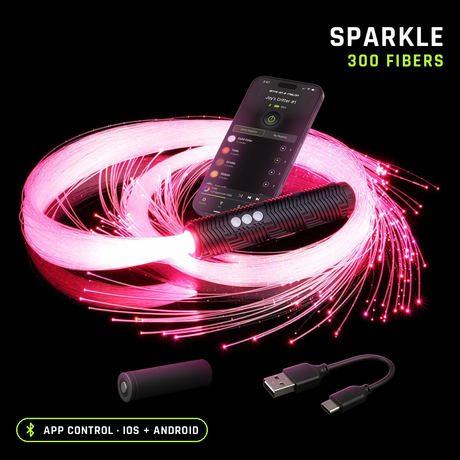
The official 2500mAh 18650 replacement for the RGB Critter, about 7 hours of color per charge.
$9.95
Charging
USB-C, in the light
Recharge through the Critter with the included cable, or swap in a charged spare and keep going.
USB-C
Long-term storage
Cool, dry, half charged
Terminals covered, never loose with keys or coins, and never left baking in a hot car.
Covered
What an 18650 actually is
The name is just the size: an 18650 is a rechargeable lithium-ion cylinder roughly 18 millimeters across and 65 millimeters long, a bit bigger than a AA. It is one of the most produced battery formats on earth, the same cell family found in laptops, power tools and electric cars, which is exactly why we designed the Critter around it instead of a sealed proprietary pack. The cell that ships in every RGB Critter BT is a 2500mAh, 3.6 V nominal 18650, and the official replacement is $9.95.
Every rechargeable cell wears out eventually; that is chemistry, not a defect. A replaceable cell means the wear item costs ten dollars and swaps in seconds, and the light itself just keeps going.
The arithmetic worth knowing: about 9 watt-hours
Watt-hours are how regulators, airlines and shippers measure a battery, and the math is one line: capacity in amp-hours times voltage. For the Critter's cell that is 2.5 Ah times 3.6 V nominal, which is about 9 watt-hours. Keep that number; it is the answer to most battery paperwork questions you will ever meet. The airline limit for a rechargeable lithium battery is 100 watt-hours before any special approval is needed, and this cell sits at less than a tenth of it.
Realistic run times: about 7 hours of color
On a full charge the RGB Critter BT runs up to 7 hours in color modes, which comfortably outlasts a night of shooting or a festival set. The exception is full-brightness white, the hungriest setting the light has, which tops out around 2 hours. Brightness is the lever: the app dims across 100 levels, and a light at half brightness sips where a light at full glare gulps.
The practical habit is simpler than the numbers: charge before you go out, and carry one charged spare. A swap takes seconds in the dark, and two cells cover any night we have ever had.
Charging practice that keeps a cell healthy
The routine could not be simpler: charge the cell inside the light, over USB-C, with the included cable. No cradle, no bench charger, nothing to configure. If you do run an external charger for spares, use a reputable one built specifically for 18650 lithium-ion cells. Beyond that, healthy charging is four boring habits:
- Charge at room temperature. Not in a freezing car, not in direct summer sun. Lithium-ion chemistry dislikes charging at temperature extremes.
- Charge where you can see it. On a desk or counter, not under a pillow, not buried in a packed bag. This is standard lithium battery practice for every device you own, not a Critter rule.
- Never charge a damaged cell. A dent, a torn wrap, or a cell that got unusually hot last time is a cell that is finished. Retire it instead.
- Top up rather than deep-drain. Lithium-ion cells prefer partial charges over being flattened to zero every time, so charging after every session is good for the cell, not bad for it.
Long-term storage: cool, dry, half charged
For a cell that will sit unused for months, three rules cover it. Store it around half charge, not full and not empty; sitting at either extreme for months ages lithium-ion chemistry faster. Store it cool and dry, meaning a drawer indoors, never a parked car in summer. And protect the terminals, because the real storage hazard is not the shelf, it is the junk drawer: a bare 18650 bridged by keys, coins or another battery can short and get dangerously hot. Retail packaging, a strip of tape across the ends, a rigid battery case, or one cell per plastic bag all count.
The RGB Critter Travel Case ($19.95) solves the same problem in transit: the spare rides in its own spot instead of loose against metal. Check stored cells every few months and top them up if they have drifted low.
Flying with spares: one rule to remember
Spare lithium cells are carry-on only, every airline, every time; they are never allowed in checked baggage. Terminals need the same protection as storage: taped, cased or bagged, not loose. The numbers are entirely on your side, since a 9 watt-hour cell sits far below the 100 watt-hour threshold where airline approval starts. A light with its cell installed and fully powered off may ride in a checked bag; we still carry ours into the cabin.
When to retire a cell
A worn or damaged 18650 does not fail politely, so retirement is a first-signs decision, not a last-gasp one. Retire a cell at any of these:
- Physical damage. A dent, a ding from a drop, or any tear or nick in the plastic wrap that exposes metal.
- Heat. A cell that got unusually hot during use or charging has told you everything you need to know.
- Fast self-discharge. Charged on Friday, noticeably drained by the next weekend without being used.
- Collapsed run time. When a cell that used to deliver a full evening is dying in a fraction of that, its cycles are spent.
Retired cells go to a battery recycling drop-off, never household trash. At $9.95 for a fresh official replacement, there is no prize for stretching a suspect cell one more night.
Outside the US: buy the cell locally
Shipping regulations mean we cannot send standalone batteries to international addresses at all, and not by overnight methods anywhere. The light itself ships worldwide with its cell installed; it is loose spare cells that cannot travel. If you are outside the US and need a spare or a replacement, buy locally to this exact specification:
- 18650 lithium-ion, 3.6 V nominal
- Unprotected, flat top
- 18.3 mm diameter x 65.0 mm length
Do not buy protected cells, button tops, or 3.2 V or 1.5 V cells; the Critter is designed around the unprotected flat-top format above. Any reputable battery retailer in your country will stock a matching cell.
Gear you'll want
A charged spare in every kit bag
$9.95; the official replacement, about 7 hours of color per charge. Cannot ship to international addresses.
Terminal protection and one home for everything
$19.95; fits a Critter, a spare 18650 and a charging cable, with the spare in its own spot.
The light the cell powers
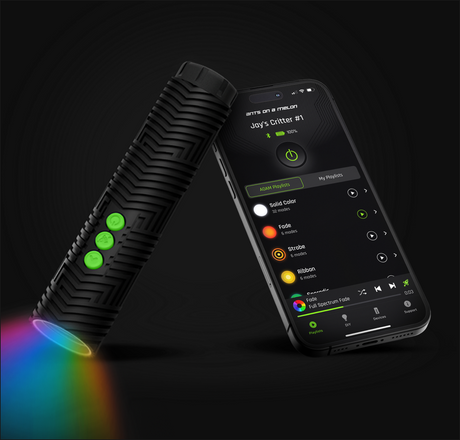
$149.95; USB-C rechargeable, and the removable core that powers 200+ twist-on tools.
RGB Critter battery FAQ
How long does the RGB Critter BT run on one charge?
Up to 7 hours in color modes. Full-brightness white is the hardest thing you can ask of the cell, at about 2 hours. Dim the light and both numbers stretch.
Can I put an 18650 battery in a checked bag?
Not a spare, ever: spare lithium cells are carry-on only, with terminals protected. A device with the cell installed may be checked if it is fully powered off, but we carry ours on.
How should I store 18650 batteries long term?
Around half charge, somewhere cool and dry, terminals covered, one cell per case or bag, and never loose with keys or coins. Check them every few months and top up if they have drifted low.
When should I replace my 18650 battery?
At the first dent, tear in the wrap, unusual heat during use or charging, fast self-discharge, or a big drop in run time. Take retired cells to a battery recycling point, not the trash.
Do you ship replacement batteries internationally?
No. Shipping regulations stop us from sending standalone cells to international addresses, so buy locally: an unprotected flat-top 18650 lithium-ion cell, 3.6 V nominal, 18.3 mm by 65.0 mm. Avoid protected, button top, 3.2 V and 1.5 V cells.
Do I need a separate battery charger?
No. The RGB Critter BT charges its cell over USB-C with the included cable. A separate quality 18650 charger is only worth adding if you want to top up spares while the light is in use.