Best LED Sabers for Flow Arts, Festivals & Cosplay (2026)
 7 min read
The short answer: for flow arts, dance, and performance, the best LED saber is a light, impact-resistant polycarbonate blade with a removable, app-controlled light source, not a metal-hilt movie replica. We are Ants on a Melon, the Oregon designers of the RGB Critter BT, and every saber we sell is one kit: the Saber Kit, from $209.95, in four blade patterns and six lengths from 6 to 36 inches. So this is not us versus a strawman: it is an honest comparison of our own blades, pattern by pattern and length by length, plus a straight answer on when you should buy a Star Wars replica or a $30 toy instead.
The short version
Best first saber (and best overall)
Smooth, even glow down the whole blade, the classic look. Reads cleanest in motion and in long-exposure photos. It is the one we duel with ourselves, and it is the cheapest pattern at every length.
from $209.95
Best for performers
Laser-cut hexagons cast crisp, geometric patterns, so there is texture in every spin.
from $219.95
Best for dancers and cosplay
Organic, wing-inspired patterns, bold and flowing, built for movement-first looks.
from $219.95
Best ambient look
Soft, star-like points of light, the subtlest of the four. Night-sky aesthetics rather than a solid beam.
from $219.95
Best two-handed flow
Essentially two sabers joined back-to-back with dual Critters, assembling to 23, 35, 47, 59, 71 or 83 inches. If your flow leans staff spinning, start here instead.
from $379.95
All four are the same kit. On one product page you pick a blade pattern and a blade length, 6, 12, 18, 24, 30 or 36 inch, and it ships with the removable RGB Critter BT inside. Price steps up with length, and Sol is $10 to $20 under the other three patterns at every length.
First: LED saber vs lightsaber replica
These are different tools, and plenty of buyers mix them up:
- Dueling replicas (metal hilts, screen-accurate sound fonts) are built for Star Wars fandom and choreographed combat. They are heavier, pricier at the quality end, and they do one thing.
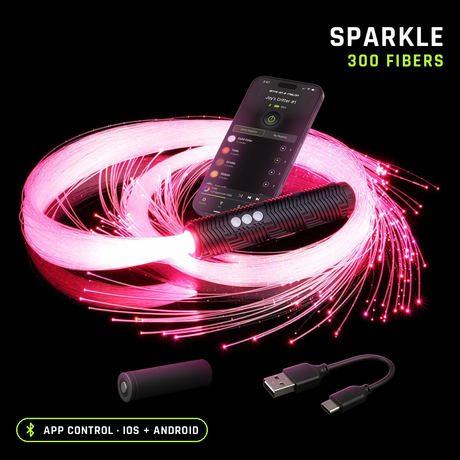
- Flow and performance sabers like ours are built for movement: lighter, faster in the hand, powered by a flashlight you can twist out and screw into a fiber whip, staff, or light painting tool. Any of 16.7 million colors from the app, patterns included.
If you want Vader's saber on your wall, buy a replica. If you want to spin, duel casually, dance, shoot light art, and perform at festivals, keep reading.
Blade-by-blade comparison
Every kit is the removable RGB Critter BT plus one twist-on blade. Same light, same brightness, same app, same 2-year warranty. The only things you are choosing are how the blade shapes the light and how long it is.
| Sol blade | Honeycomb blade | Butterfly blade | Stellar blade | LED Staff Kit | |
|---|---|---|---|---|---|
| Price | From $209.95 | From $219.95 | From $219.95 | From $219.95 | From $379.95 |
| Length | 6, 12, 18, 24, 30 or 36 inch blade | 6, 12, 18, 24, 30 or 36 inch blade | 6, 12, 18, 24, 30 or 36 inch blade | 6, 12, 18, 24, 30 or 36 inch blade | 23, 35, 47, 59, 71 or 83 inch staff |
| Blade character | Smooth, even glow down the whole blade, the classic look | Laser-cut hexagons cast crisp, geometric patterns | Organic, wing-inspired patterns, bold and flowing | Soft star-like points, the subtlest of the four | Two blades joined back-to-back, in any of the four patterns |
| Best for | Duels, first saber, clean light trails in photos | Performers who want texture in every spin | Dancers and cosplay looks | Ambient style, night-sky aesthetics | Staff spinning and two-handed flow |
| Light source | Removable RGB Critter BT, 170 lumens | Removable RGB Critter BT, 170 lumens | Removable RGB Critter BT, 170 lumens | Removable RGB Critter BT, 170 lumens | Dual RGB Critter BTs |
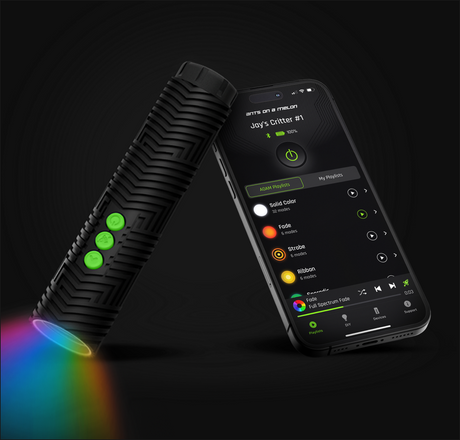
| Colors & modes | 16.7 million colors, 145+ modes, unlimited custom playlists via the free iOS/Android app; three onboard buttons work without it | ||||
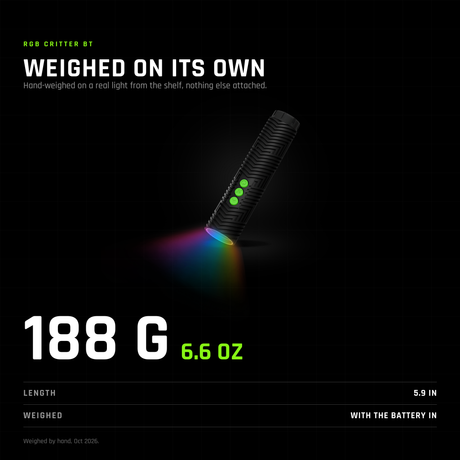
| Battery | Up to about 7 hours per rechargeable 18650 battery; swaps take seconds | ||||
| Blade material | Impact-resistant polycarbonate, built for real contact | ||||
| Warranty | Light: 2 years, lifetime upgrade available in the cart | ||||
Sol is the cheapest pattern at every length. Honeycomb, Butterfly and Stellar all price the same as each other, $10 to $20 above Sol, and the longest blades run $20 to $30 more than the shortest. The staff kit prices the same way, by pattern and by length.
Where each blade wins
Sol blade: the first-saber pick
The Sol blade is our honest default recommendation. The smooth, even glow down the whole blade is the classic saber look, it reads cleanest in motion and in long-exposure photos, and it is the one we duel with ourselves. It is also the most forgiving blade to learn with, the cheapest pattern at every length, and the one you will keep using even after you add patterned blades. Buy a patterned blade second; blades twist onto the Critter you already own, so upgrading costs a blade, not a whole saber.
Honeycomb blade: the texture pick
The Honeycomb blade swaps the smooth glow for laser-cut hexagons that cast crisp, geometric patterns. If you perform and want the blade itself to be part of the visual, texture in every spin rather than a clean beam, this is the one. The trade: in long-exposure photos the pattern is busier than the Sol's clean trail, and it costs $10 to $20 more than a Sol blade of the same length.
Butterfly blade: the dance and cosplay pick
The Butterfly blade goes organic: wing-inspired patterns, bold and flowing. It suits dancers and cosplay looks where the saber is a costume piece as much as a prop. Same light, same hilt, same app; it prices identically to Honeycomb and Stellar, so between those three it really is a pure aesthetic call.
Stellar blade: the ambient pick
The Stellar blade is the subtlest of the four: soft, star-like points instead of a solid glow. Pick it for ambient style and night-sky aesthetics, when you want atmosphere rather than a beam that dominates the frame.
LED Staff Kit: the two-handed pick
The LED Staff Kit (from $379.95) is essentially two sabers joined back-to-back with dual Critters. It comes in the same four blade patterns and the same six blade lengths, which assemble into a 23, 35, 47, 59, 71 or 83 inch staff. If your flow leans staff spinning rather than saber work, start there instead.
Can you actually hit things with them?
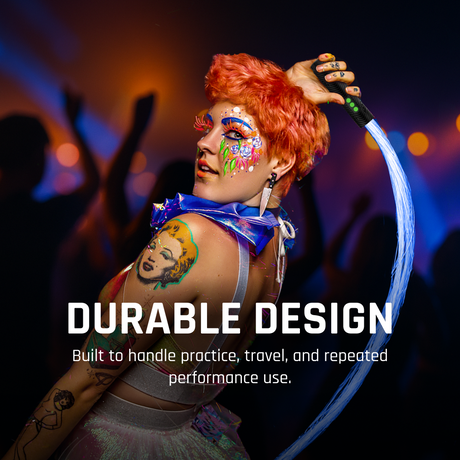
Yes. The blades are impact-resistant polycarbonate and take real contact; that is what they are for. The Critter itself sits in a grippy silicone housing. If you break something anyway, the 2-year warranty covers defects and a lifetime upgrade is available in the cart.
What about cheap Amazon sabers?
Toy-grade sabers run $20 to $40 and are fine for kids' birthday parties. The tradeoffs are real, though: fixed or limited colors, sealed batteries that die for good, thin plastic that cracks on first contact, and no parts or warranty when they do. Our system costs more up front because the light source is a tool you keep: one Critter later powers a fiber optic whip, an LED staff, and every light painting tool we make, 200+ twist-on tools in all.
Which saber should you buy?
First saber ever, or you mostly duel
Cleanest look in motion and in photos, cheapest pattern at every length, and the blade you will keep using longest.
You perform and want texture in every spin
Dance sets or cosplay looks
Ambient, night-sky vibe over a solid beam
Your flow leans staff spinning, not saber work
From $379.95: two sabers back-to-back with dual Critters, assembling to 23 to 83 inches.
You already own an RGB Critter BT
Buy a blade alone from the saber blade accessories
Every blade is a twist-on accessory, $15 to $55 depending on pattern and length, so upgrading costs a blade, not a whole saber.
You want Vader's saber on your wall
Buy a dueling replica, not ours
Metal hilts and screen-accurate sound fonts are a different tool for a different job.
You want a saber plus the rest of a kit
Assemble a complete, compatible kit around the RGB Critter BT and see the total as you go.
LED saber FAQ
Which LED saber is best for beginners?
The Sol blade. Smooth glow, classic look, most forgiving to learn with, cheapest pattern at every length, and the blade you will keep using even after adding patterned ones.
What blade length should I pick?
Blades come in 6, 12, 18, 24, 30 and 36 inch. For solo saber spinning, 24 and 30 inch are the safe middle: long enough to read on camera, short enough to keep the tip speed manageable. Go 36 inch for stage presence and long exposures, 6 or 12 inch for contact work, doubles, and packing light. Price steps up with length.
Do the sabers work without the app?
Yes. Three onboard buttons control power, color, and modes. The free app (iOS and Android) adds 16.7 million colors, custom patterns, and saved playlists.
How long does the battery last?
Up to about 7 hours per rechargeable 18650 battery, and swaps take seconds. A spare battery covers a full festival night.
Can I use the blades with an RGB Critter I already own?
Yes. Every blade is a twist-on accessory: see the saber blade accessories to buy blades alone, $15 to $55 depending on pattern and length.
Are these Star Wars lightsabers?
No, and they are not trying to be. They are performance sabers for flow arts, dance, and cosplay, built around a removable, app-controlled flashlight.
Keep learning: What is flow arts? · Choosing your first flow prop · Shop all saber kits