Flow arts is what happens when dance, juggling, and a glowing prop collide. A spinner with a fiber optic whip at midnight is doing flow arts. So is the person rolling a staff across their shoulders, the gloved hands tracing patterns an inch from someone's eyes, and the hooper orbiting a ring of LEDs at a festival. The props differ; the idea is the same: move with an object until the object seems to move with you.
Nobody needs a definition to enjoy watching it. But if you're here, you probably want in, and the honest questions are what flow arts actually are, which prop to start with, and whether you'll still be using it in six months. This guide answers all three, and where another company makes the better prop for you, we say so by name.
What are flow arts?
Flow arts is the umbrella term for movement-based prop play: spinning, tossing, and dancing with objects like whips, staffs, poi, hoops, and fans, usually to music and often with light. It sits somewhere between dance, juggling, and meditation, and it borrows freely from all three. There is no governing body, no belt system, and no wrong way in; there is only you, an object, and the slow discovery that the object has opinions about physics.
Where the name comes from: the flow state
The "flow" is the flow state: that absorbed, time-melting focus people hit when the prop stops feeling like an object and starts feeling like a limb. You do not need talent to reach it; you need repetition. A basic figure-eight, drilled until your hands stop asking for instructions, is usually the first taste, and it is the reason a hobby that starts as "this looks cool" quietly turns into a practice.
Flow arts vs. light painting: same lights, different audience
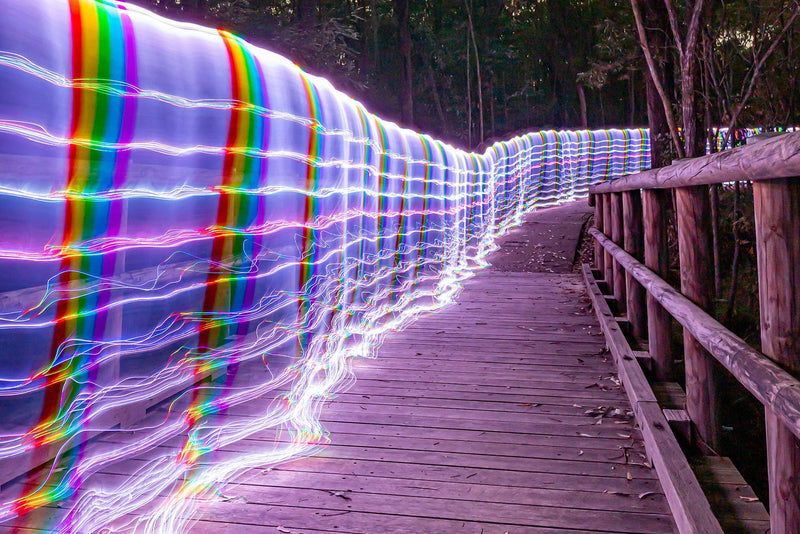
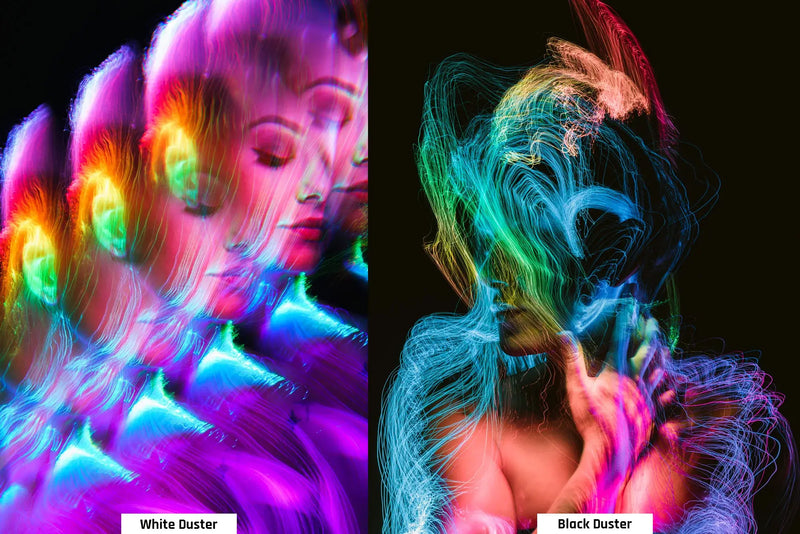
Flow arts is performed live for people watching. Light painting is performed for a camera during a long exposure, where the movement draws into a photograph. Same lights, overlapping techniques, different audience, and plenty of people do both with the same kit. If the camera side calls to you, start with What Is Light Painting?
The disciplines: a tour of the props
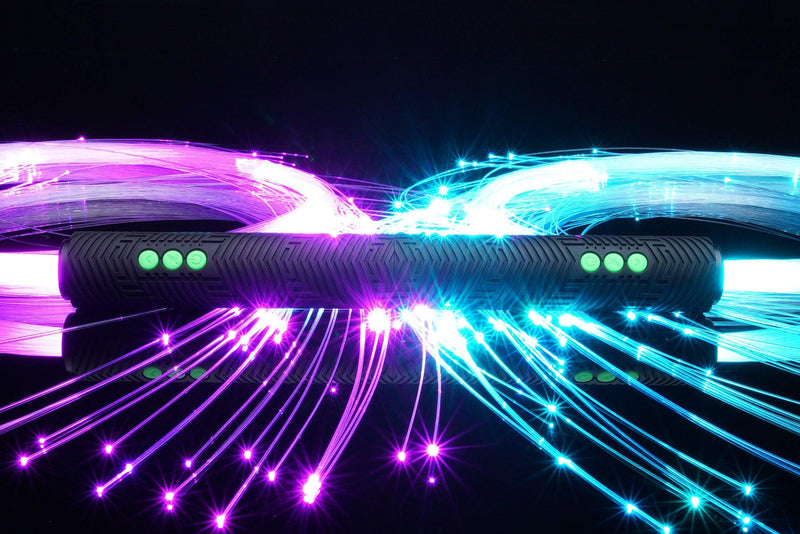
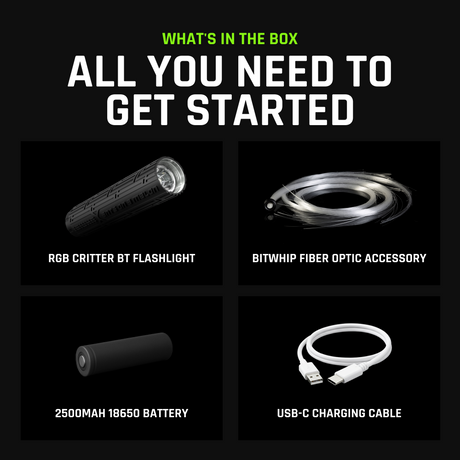
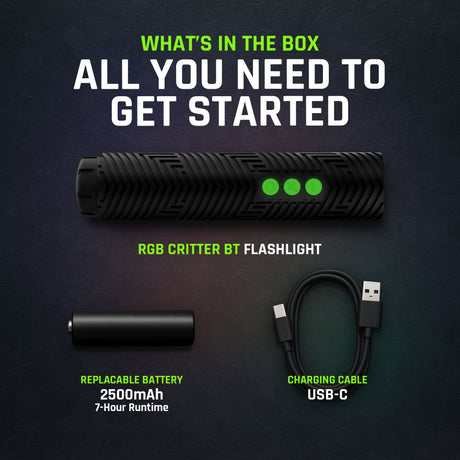
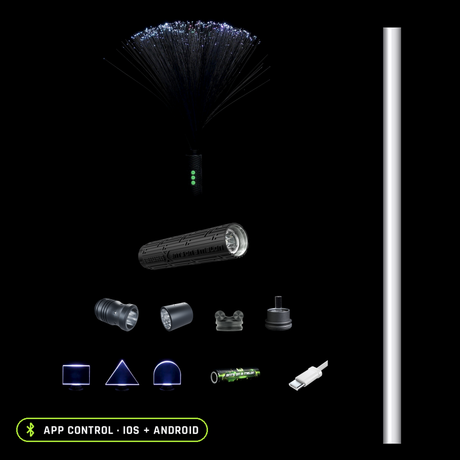
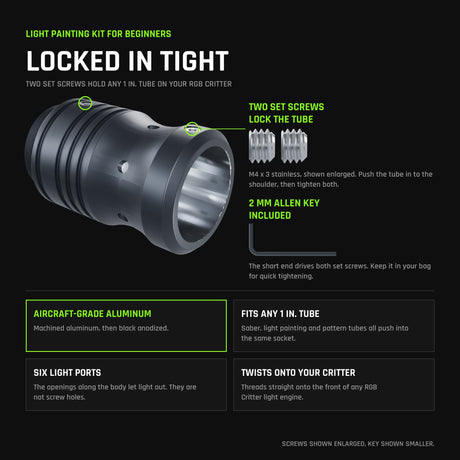
One thing worth knowing before you meet them: most of our props run on a single modular light source, the RGB Critter BT. The light twists out of a whip head and into a saber, a staff, or a light painting blade, so your second prop costs less than your first. Keep that in mind as you read; it changes the math on "which prop" from a one-time bet into a starting point.
Fiber optic whips: the easiest way in
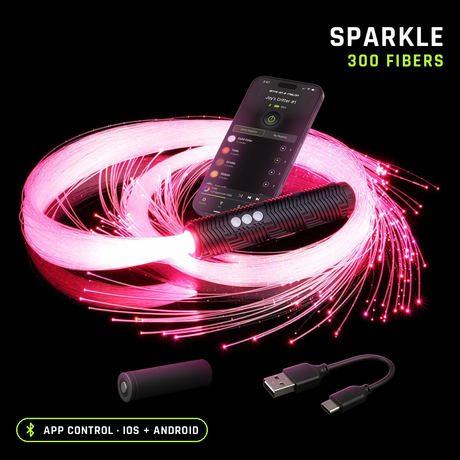
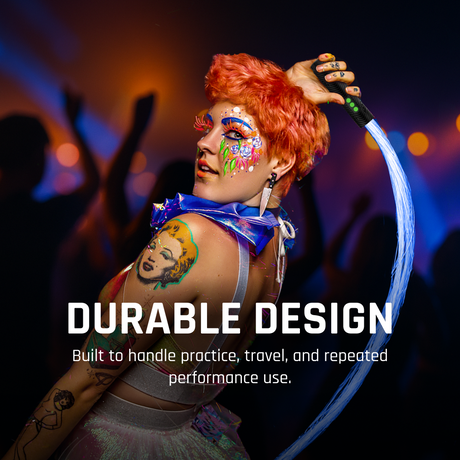
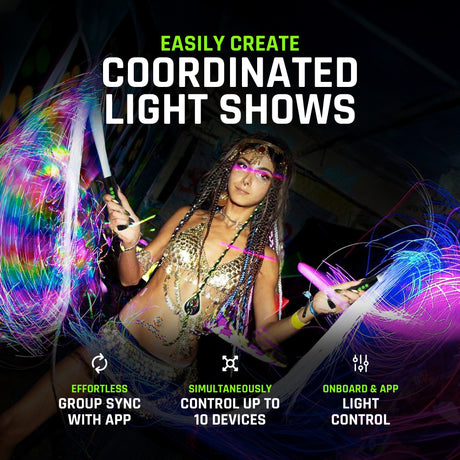
A whip is the most forgiving light prop made: soft fibers, instant visuals, safe to spin near people, which is why whips took over festivals. If you are choosing your very first flow prop and want light, start here. New to whips? Read what a fiber optic whip is, then how to choose one, then the honest three-brand comparison where we tell you when to buy FiberFlies or GloFX instead of our BitWhip. Once one is in your hands, learn the first five moves.
LED staffs: presence and technique
Staffs reward technique: spins, contact rolls, doubles. The fundamentals come together in a weekend, and the ceiling is a decade high. Dedicated one-piece contact staffs from Flowtoys balance best for rolls; our LED Staff Kit is the brightest option and splits into two complete sabers. The full cross-brand breakdown, including where Flowtoys, MoodHoops, UltraPoi, and The Spinsterz win, is in Best LED Staffs in 2026.
LED sabers: duels, cosplay, and performance
Our saber kits (from $179.95) pair an impact-resistant blade with the RGB Critter BT: choose the smooth-glow Sol for dueling or laser-cut Stellar, Honeycomb, and Butterfly patterns for texture. Honest expectation-setting: these are modular flow and cosplay tools, not movie-replica sabers; if you want a hilt with a removable in-hilt blade and sound effects, replica saber brands are a different category serving a different goal. Ours win on color control (16.7 million via app), pattern variety, and the fact that the light powers 200+ other tools.
Glow ropes and jump ropes: the underrated ones
The Jupiter Rope ($169.95) is a 6-foot side-glow cable brighter and tougher than EL wire, for rope dart flow, bikes, and camp decor. The Jump Rope Kit ($295) puts rotating bearings and two RGB Critters on a 9 or 10 foot rope for the most cardio-intensive flow prop made. Few brands make either; this niche is mostly ours.
LED poi and hoops: learn them elsewhere, happily
Poi (weighted lights spun on tethers) and hoops are two of the oldest doors into flow arts, with the deepest tutorial traditions of any prop. We do not make either, and pretending otherwise would waste your time. For poi, Flowtoys' Podpoi are the community standard and UltraPoi is the strong value pick. For LED hoops, MoodHoops and The Spinsterz lead. Both are classic first choices with huge tutorial communities, and if you fall in love with light through them, everything above still awaits.
Coming from fire? LED trains anywhere
Many flow artists arrive from fire props. LED versions let you train anywhere, perform where fire is banned, and skip the fuel logistics. We wrote a full guide on transitioning from fire to LED safely.
How to start: your first month, step by step
The single biggest beginner mistake is buying three props and mastering none. Pick one, give it a month, and let the prop tell you what you like.
-
Pick one prop and commit. If you want instant gratification and crowd-safe fibers, that is a whip. If you prefer something rigid in your hands, a staff or saber. If you'd rather learn on a tether, poi (Flowtoys or UltraPoi make the ones to get). The table above is your shortcut.
-
Learn the figure-eight before anything else. Nearly every spinning prop shares this one foundation. Drill it with both hands, slowly, in daylight, until it stops requiring thought. Basic whip figure-eights or staff rotations take about one evening and already look great in the dark.
-
Practice with the lights off, film with your phone. The dark is flattering; the camera is honest. A short clip shows you what your plane control actually looks like and doubles as a progress log you'll be glad to have in six months.
-
Add music, then add space. Flow arts are usually danced to music, so practice to the songs you'd perform to. When you take it public, give yourself a bubble: whips and tethered props are crowd-safe, but staffs, sabers, and ropes need clear room.
-
Find the community. Flow jams, festival prop circles, and online tutorial communities are where moves actually spread. Nobody there cares that you're new; everybody there was.
Gear you'll want
First light prop, want it to look good tonight
BitWhip
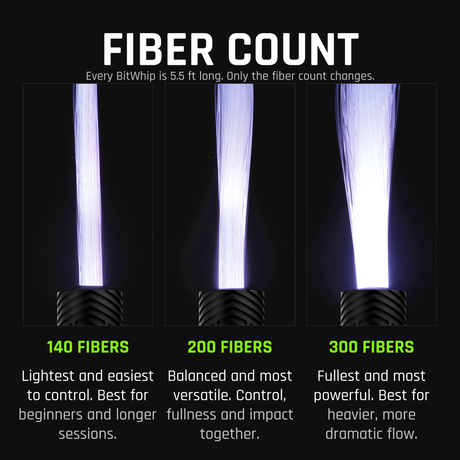
$159.95 for 140 fibers, up to $179.95 for 300. Read the whip comparison first; sometimes the answer is FiberFlies or GloFX.
You prefer a rigid prop
Saber kits or the LED Staff Kit
The staff splits into two complete sabers, so it is two props in one box.
You want poi or a hoop
Flowtoys (Podpoi), UltraPoi, MoodHoops, or The Spinsterz
We do not make poi or hoops; those brands do it well.
You want a whole kit in one checkout
Kit Builder
Assemble it around the light you own and see the total as you go.
Where to go from here
Shopping for your first gear? Our flow arts equipment guide for beginners compares every starter prop by difficulty and price. Whip-curious readers should start with What Is a Fiber Optic Whip? and the whip chooser. Buying for someone else entirely? The gift guide sorts our catalog by person, not by product. And if you already own a Critter, the compatibility guide shows every prop your light already powers.
Flow arts FAQ
What are flow arts?
Flow arts is the umbrella term for movement-based prop play: spinning, tossing, and dancing with objects like whips, staffs, poi, hoops, and fans, usually to music and often with light. It sits between dance, juggling, and meditation. The name comes from the flow state people hit when the prop stops feeling like an object and starts feeling like a limb.
Are flow arts hard to learn?
The floor is low and the ceiling is endless. Basic whip figure-eights or staff rotations take one evening to learn and already look great in the dark. The advanced stuff (isolations, contact rolls, tech patterns) takes months, which is exactly why people stay hooked for years.
What is the best flow prop for a complete beginner?
A fiber optic whip, for three reasons: it looks spectacular on night one before you have any skill, it can't really injure you or bystanders, and the basic moves are learnable in minutes. Staffs and sabers are close seconds for people who prefer a rigid prop. Poi is the classic alternative with the deepest tutorial tradition, if you'd rather learn on a tether.
Which flow props are safest around crowds?
Whips (soft fibers) and tethered props like poi. Staffs, sabers, and ropes need clear space; give yourself a bubble at festivals.
How much does it cost to get into flow arts?
Real light props from established makers run from about $100 to about $450: whips run $100 to $180, poi around $100 to $150, saber kits from $179.95, and LED staff kits from $379.95. With a modular system the accounting changes: the light is the main cost, and each additional prop head is cheaper than a standalone prop, since it reuses the light you already own.
Do festivals allow LED flow props?
Most welcome them (it's fire props that face bans), but events vary: some restrict props in dense crowds or require performer areas. Check your event's prop policy before you pack.
Do flow props need a phone app?
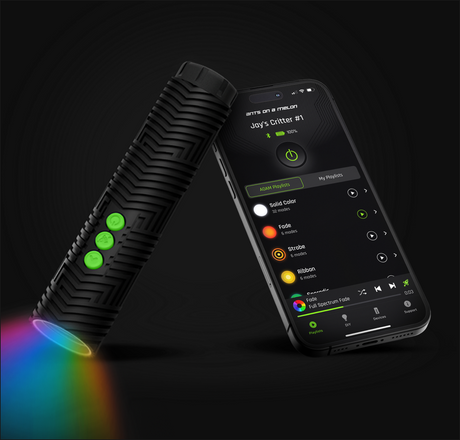
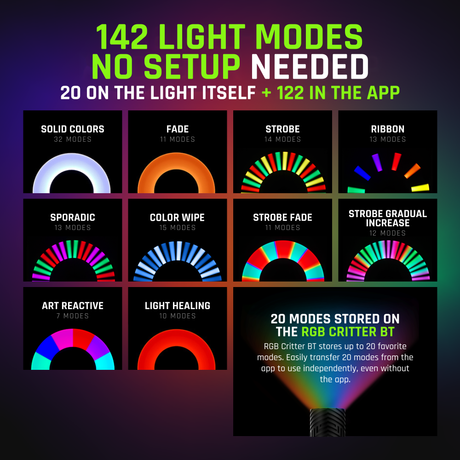
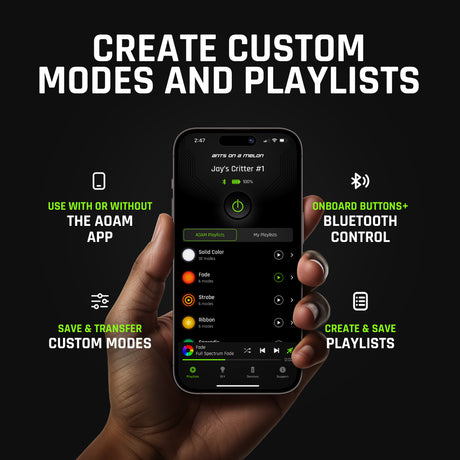
Ours don't. The RGB Critter BT ships with 20 lighting modes stored on the light and runs from its buttons; the free app exists for building custom modes, and the light runs solo after loading them. When comparing props from any maker, check whether the light works without a phone; standing in a dark field fighting Bluetooth is nobody's flow state.
What is the difference between flow arts and light painting?
Flow arts is performed live for people watching; light painting is performed for a camera during a long exposure, where the movement draws into a photograph. Same lights, overlapping techniques, different audience. Plenty of people do both with the same kit; if the camera side calls to you, start with What Is Light Painting?