How to Choose a Fiber Optic Whip: Fibers, Length, Control, and Budget
 6 min read
Buying your first fiber optic whip comes down to six decisions: fiber count, fiber type, length, light source, control, and budget. We make the BitWhip, so we will use our own options as examples, but the logic applies to every brand, and where a competitor is the better answer we will say so. (New to whips entirely? Start with what a fiber optic whip is.)
Decision 1: fiber count — density is the look
Fiber count is the biggest driver of how a whip looks and costs. More fibers means a denser, brighter, fuller ribbon of light; fewer fibers means a lighter whip and a lower price. The market ranges from 80 fibers (the FiberFlies PixelWhip 4 standard head, with 120 and 160 heads available) to 130+ end-glow nano fibers (GloFX Space Whip Remix) to our 140, 200, and 300 fiber options.
- 140 fibers: plenty for a first whip; light in the hand, easiest on the budget.
- 200 fibers: the sweet spot for most flow artists; noticeably fuller in photos and video.
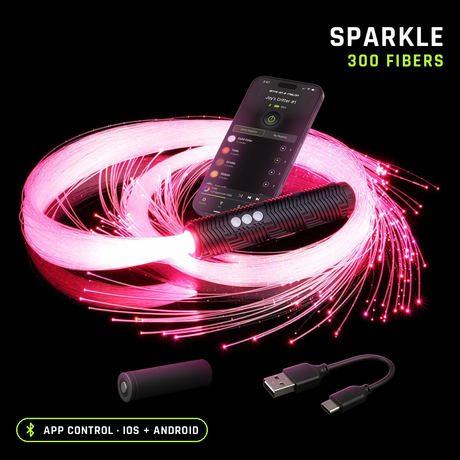
- 300 fibers: the densest whip made by anyone; the pick for performers and light painters who want maximum presence.
Decision 2: fiber type — End Glow vs Sparkle
End glow fibers carry light to bright tips for clean, comet-like trails and maximum durability. Sparkle fibers twinkle along the whole strand like a starfield but are more fragile. Same price either way on our whips, so this is purely a style-and-durability call: contact-heavy flow gets end glow, camera-facing magic gets sparkle. Full breakdown with photos of each in End Glow vs Sparkle Fiber.
Decision 3: length — standard is the safe call
Standard whips run 5.5 to 6 feet, which suits most people and most spaces. Go 7 foot (our Extra Long) if you are tall, flow outdoors with room to spare, or want the slowest, most dramatic wave patterns. Shorter tails are quicker and easier to control in crowds. Our Uncut option leaves the fiber tips untrimmed at 5.5 feet for a natural taper. If in doubt, standard length is the right call.
Decision 4: light source — built-in or removable
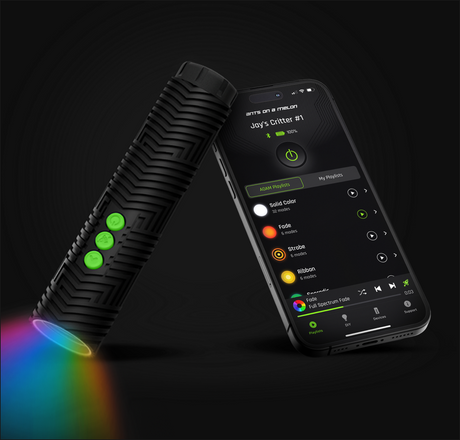
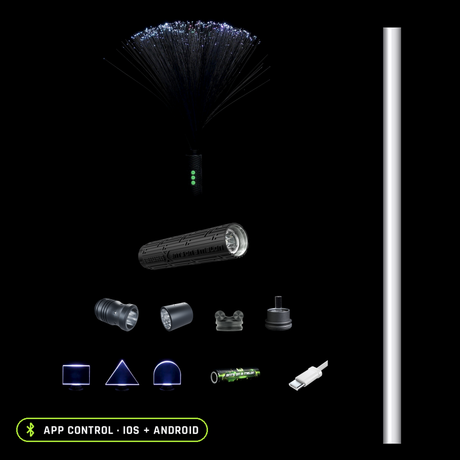
Every whip is a fiber bundle driven by a light, and where that light lives quietly decides what your money buys long-term. The PixelWhip 4 and Space Whip Remix build the light into the handle: one sealed unit, nothing to detach, and the handle only ever powers the whip. The BitWhip goes the other way: the whip head twists onto our removable RGB Critter BT flashlight, a 170-lumen light that also powers 200+ other twist-on tools (sabers, staffs, light painting blades, fiber costume kits) and runs 7 hours on a charge. The whip and the light both carry 2 years, with a lifetime upgrade available in the cart. The honest trade: if all you ever want is a whip, a built-in light is one less part to think about and costs less. If you can see yourself owning more than one light toy, or you shoot long-exposure light painting, the removable light changes the math.
Decision 5: control — one button vs app
This is a genuine philosophy split, and the honest answer depends on you:
- One-button whips (GloFX Space Whip Remix, FiberFlies PixelWhip 4): charge, press, flow. Nothing to configure, nothing between you and spinning. The Space Whip Remix cycles 35 colors across 18 modes from a single button. If menus annoy you, this is your lane, and GloFX does it especially well.
- App-controlled whips (the BitWhip is the only one): 16.7 million colors, 145+ modes, unlimited custom playlists, and exact palettes you can save and reload, synced across every light you own, on iOS and Android. The BitWhip also works fine without the app via three onboard buttons. If you perform to themes, match colors to outfits, or shoot light painting, app control is the whole game.
Decision 6: budget — what your money buys
| Budget | What to buy |
|---|---|
| Under $50 | Nothing. Marketplace clones at this price use brittle fiber that shatters within weeks. Save up one more month. |
| ~$100 | FiberFlies PixelWhip 4 ($99.99): the proven budget entry with upgradeable fiber heads and a lifetime warranty against manufacturing defects. |
| ~$110 | GloFX Space Whip Remix: one-button simplicity, 8 to 10 hour battery, lifetime warranty. |
| $159.95 to $179.95 | BitWhip ($159.95 for 140 fibers, up to $179.95 for 300): app control, 140 to 300 fibers, removable light that powers 200+ other tools. |
| $29.95 to $54.95 | Already own an RGB Critter BT? The BitWhip Accessory head alone makes it the cheapest serious whip anywhere. |
| $309.95+ | Double BitWhip: two synced whips for doubles flow and performing duos. |
Which whip should you buy?
First whip, tight budget
FiberFlies PixelWhip 4
At $99.99 it is the least expensive real whip here, and you can upgrade its fiber head later. A used whip from a real brand also works.
Zero-fuss festival whip
GloFX Space Whip Remix.
One button, 8 to 10 hour battery, nothing to configure.
Most flow artists
BitWhip: End Glow, 200 fibers, standard length.
You already own an RGB Critter BT
$29.95 to $54.95 twists onto the light you already own — the cheapest serious whip anywhere.
Doubles flow or performing duos
$309.95+ for two synced whips. See the double whip guide.
You have picked your whip, what else?
It shows every compatible part for your choice and totals it up as you go.
Choosing a whip FAQ
Is a heavier whip better?
Not better, different. More fibers add presence and a slower, silkier wave; fewer fibers whip faster and tire your arm less. 200 fibers is the balance point most people land on.
Should my first whip be end glow or sparkle?
End glow. It is brighter at the tips, more durable, and photographs cleaner. Buy sparkle as your second head once you know how you flow.
What length fiber optic whip should I get?
Standard 5.5 to 6 foot whips suit most people and spaces. Choose 7 foot if you are tall, flow outdoors, or want slow dramatic waves; shorter tails are easier to control in crowds.
Do I need the app?
No. One-button whips from GloFX and FiberFlies have no app at all, and every BitWhip works from its three onboard buttons. The app matters when you want exact colors, custom playlists, or multiple synced lights.
What if I already own an RGB Critter BT?
Skip the full kit. The BitWhip Accessory head twists onto your existing light for $29.95 to $54.95.
Can I upgrade later without rebuying everything?
On the BitWhip, yes: fiber heads swap, so you can add a 300-fiber head or a sparkle head to the same light. On built-in-handle whips you replace the whole whip to change looks (the PixelWhip's upgradeable heads are the exception).
Still torn between specific whips? We compare the BitWhip against the Space Whip Remix and PixelWhip 4 spec by spec, including where they win, in Best Fiber Optic Whips.

Ants on a Melon team, Oregon
We compared our whip honestly against GloFX and FiberFlies, including where they win, in Best Fiber Optic Whips. Care tips live in the BitWhip care guide.
750+ verified reviews
Keep reading
More guides from the people who make the gear.
Light painting
How to Photograph a Fiber Optic Whip: Settings That Work the First Time
7 min readRead
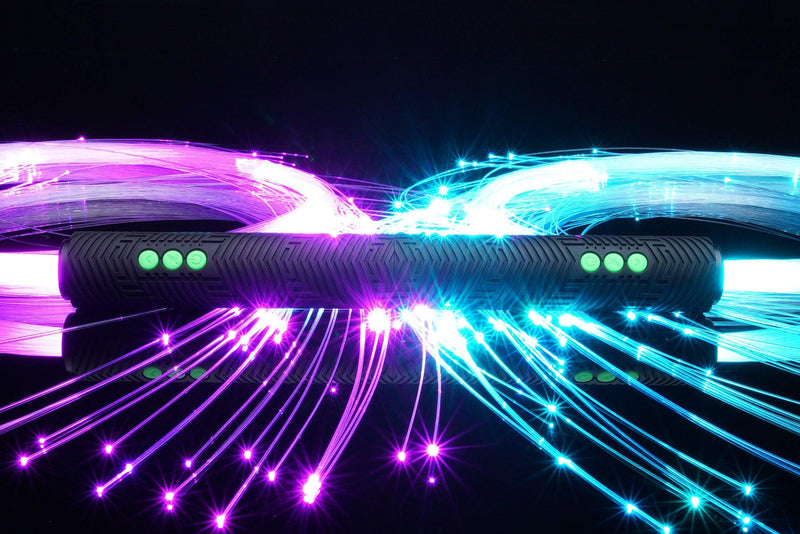
Fiber whips
Double Fiber Optic Whips: Double-Ended, One in Each Hand, or Two People
6 min readRead

Light painting
Fiber Optic Brushes and Wands: What They Are and How to Light Paint With One
9 min readRead

Tech explained
PWM vs Analog Dimming: Which to Use for Light Painting
4 min readRead