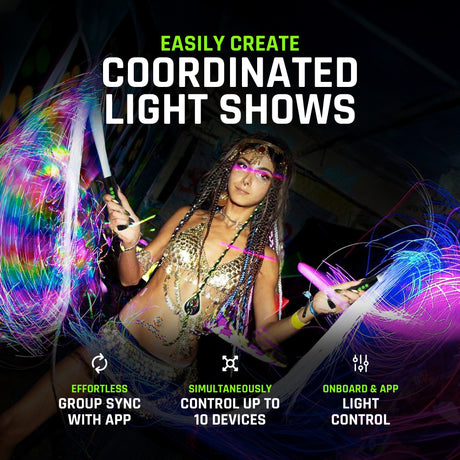
A fiber optic whip is a handheld light with a bundle of hundreds of thin, flexible fiber optic strands attached to one end. The light shines into the bundle, every strand carries it, and when you move, the fibers paint wide, flowing trails of color through the air. The same prop goes by several names: pixel whip, space whip, light whip, rave whip, and fiber whip all describe the same thing. We make one of them (the BitWhip), so we will explain the whole category the way we would to a friend at a festival, not the way a sales page would.
One prop, many names
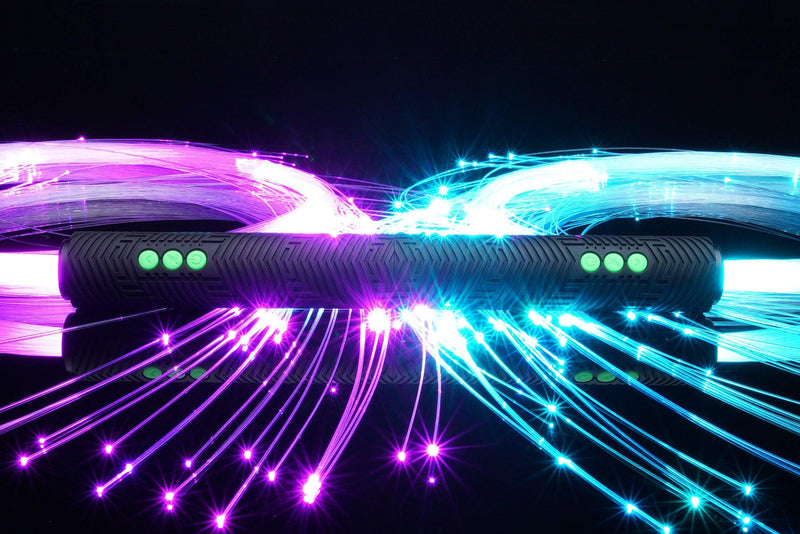
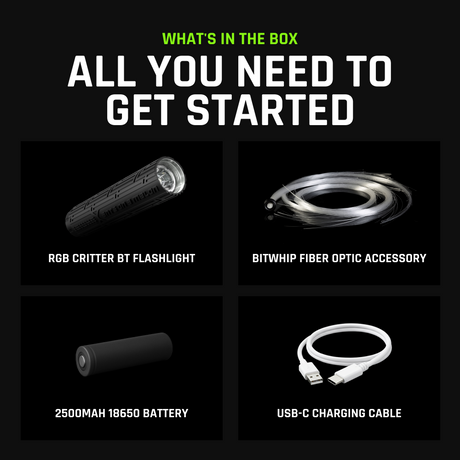
"PixelWhip" is a product name from FiberFlies that became shorthand for the whole category, the way Kleenex did for tissues. "Space whip" comes from GloFX's Space Whip line. "Light whip" and "fiber optic whip" are the generic terms. Our version is the BitWhip. Whatever the name, the anatomy is the same: a handle with a light source, a 360-degree rotating bearing, and a bundle of end-glow fibers.
How a fiber optic whip works
Three parts do all the work, and understanding them is most of what you need to shop confidently.
The light source: where the brightness comes from
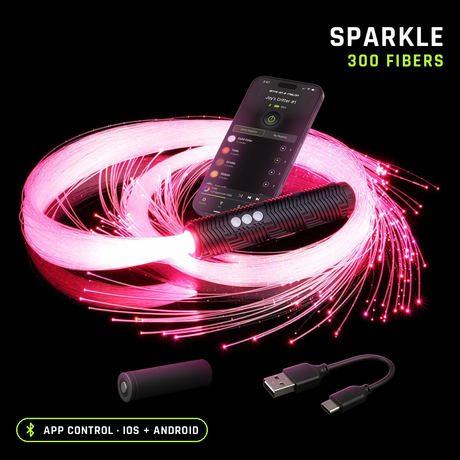
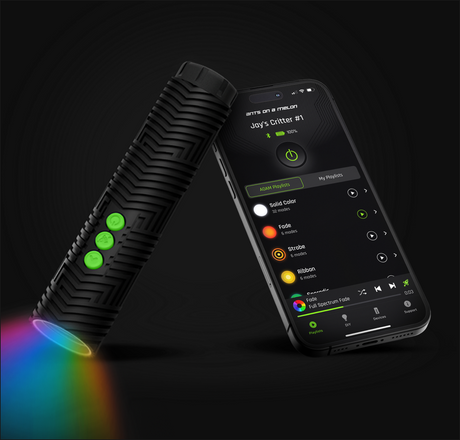
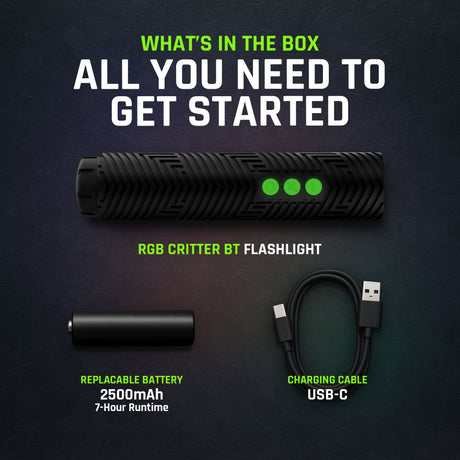
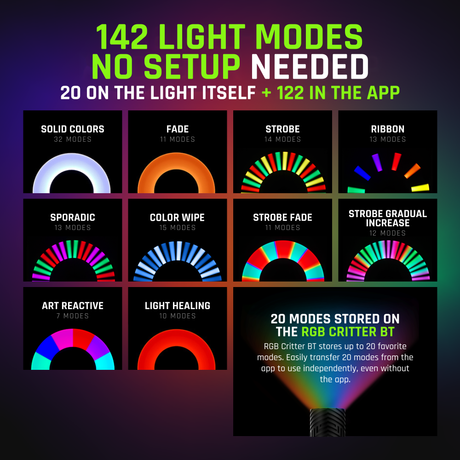
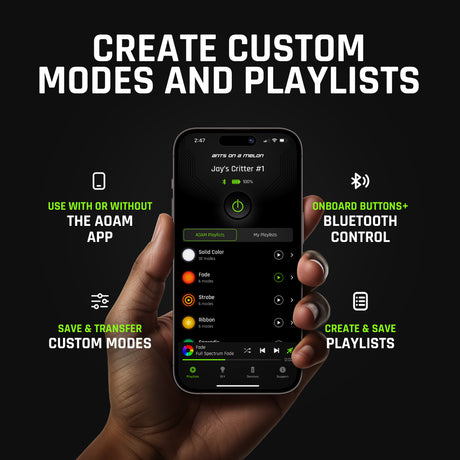
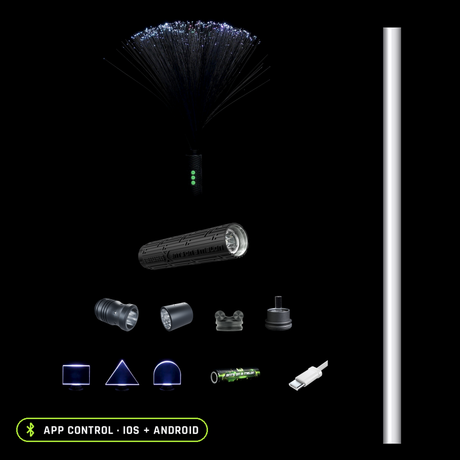
An LED in the handle (or, on the BitWhip, a removable RGB Critter BT flashlight) shines into the fiber bundle. Brightness and color come almost entirely from this part. It is also where whips differ most: some are a fixed LED with one button, while the BitWhip's light twists off and powers 200+ other twist-on tools — sabers, staffs, blades, whips, costume kits, dusters, and writers — and gives you 16.7 million colors, 145+ modes, and unlimited custom playlists via its iOS/Android app (it works without the app too).
The fiber bundle: where the look comes from
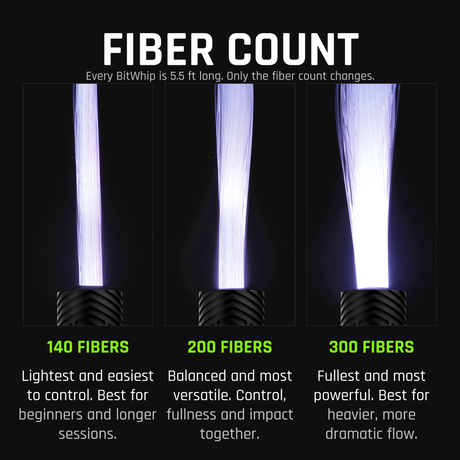
Between 80 and 300 strands, depending on the whip, each carrying light along its length. More fibers means a denser, brighter, fuller-looking whip. Fibers come in end glow or sparkle finishes — more on that below.
The bearing: why it does not tangle
A 360-degree swivel where the bundle meets the handle, so the fibers spin and wrap smoothly instead of twisting into a knot. It is an easy part to overlook and one of the first things that separates a real whip from a cheap clone.
End Glow vs Sparkle fiber: the one choice people agonize over
Fiber whips come in two fiber styles, and the difference is entirely about the look you want in motion. Rather than compress it into a paragraph, we wrote a full breakdown of brightness, durability, and how to choose in our End Glow vs Sparkle Fiber guide. The short answer for a first whip: you cannot really go wrong, and the BitWhip is offered in both, at 140, 200, or 300 fibers.
What people use fiber whips for
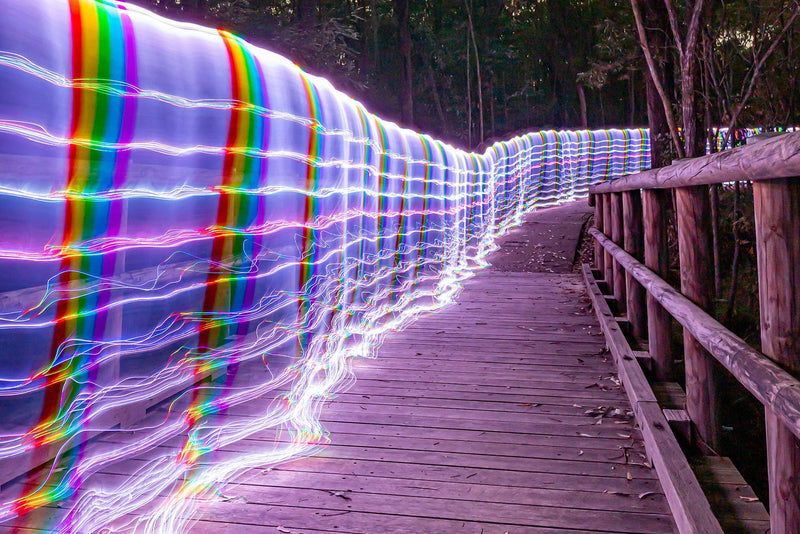
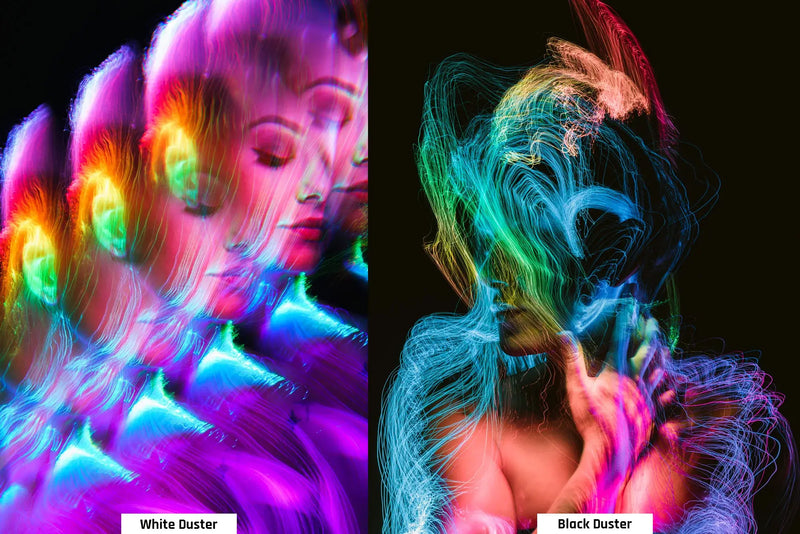
Fiber whips are a staple of flow arts, the movement practice built around props like poi, staffs, and hoops. The fibers are soft, so a whip is one of the most forgiving props to learn and among the safest to spin around other people, which is why they took over festivals. Performers use them for stage visuals, and photographers use them for light painting, where a single long exposure turns one whip pass into a river of color. Here is how to photograph one.
What does a fiber optic whip cost?
A real one from an established maker runs about $100 to $180: the FiberFlies PixelWhip 4 at $99.99, the GloFX Space Whip Remix around $110, and our BitWhip at $159.95 to $179.95 with 140 to 300 fibers and app control. The $30 marketplace clones use brittle fiber that shatters within weeks; nearly everyone who buys one ends up buying a real whip afterward. We compared the three real options honestly, including where the others beat us, in our Best Fiber Optic Whips guide. The FiberFlies and GloFX prices above were checked in August 2026.
The BitWhip at a glance
Gear you'll want
Your first fiber whip
BitWhip
$159.95 for 140 fibers, up to $179.95 for 300.
You already own an RGB Critter BT
BitWhip Accessory head
$29.95–$54.95 — twists onto the light you already have.
Fiber optic whip FAQ
What is a fiber optic whip?
A fiber optic whip is a handheld light with a bundle of hundreds of thin, flexible fiber optic strands attached to one end. The light shines into the bundle, every strand carries it, and moving the whip paints wide, flowing trails of color through the air. It is also called a pixel whip, space whip, light whip, or rave whip.
Is a pixel whip the same as a fiber optic whip?
Yes. Pixel whip, space whip, light whip, and fiber whip are different names for the same category of prop. PixelWhip and Space Whip started as specific product names and became generic.
Are fiber optic whips hard to learn?
No, they are one of the easiest flow props to start with. The fibers are soft and light, so mistakes do not hurt, and basic flowing looks good on day one. Depth comes from tech like wraps, stalls, and body tracing.
How long do the fibers last?
With normal flow use, years. Hard contact with pavement breaks strands over time on every brand; that is physics, not a defect. Quality whips have replaceable fiber heads, and we replace loose fiber bundles free.
Should I get End Glow or Sparkle fiber?
It is a look preference, not a right answer. We break down brightness, durability, and how to choose in our End Glow vs Sparkle Fiber guide.
How much does a fiber optic whip cost?
A real one from an established maker runs about $100 to $180: the FiberFlies PixelWhip 4 at $99.99, the GloFX Space Whip Remix around $110, and our BitWhip at $159.95 to $179.95 with 140 to 300 fibers and app control. The $30 marketplace clones use brittle fiber that breaks within weeks.
Where should I buy a fiber optic whip?
From a maker that publishes specs and stands behind a warranty: FiberFlies, GloFX, or us. See the honest comparison or go straight to the BitWhip.

Ants on a Melon team, Oregon
We have designed fiber optic whips since 2012, and we would rather you buy the right whip than our whip.