Fiber Optic Costumes in 2026: Kits, Ready-Made, and DIY, Compared Honestly
 6 min read
We make a Fiber Optic Costume Kit, so read this guide knowing that. But a glowing outfit is not one product, it is an idea with three genuinely different ways in, and ours is only the right answer for some of them. This is everything we know about fiber optic costumes: what they are, how the glow actually works, how to get or build one, and where each path makes sense.
What a fiber optic costume actually is
A fiber optic costume is a garment — a coat, dress, cloak, umbrella, or even a wig — carrying a bundle of hair-thin optical fibers fed by a light source. The light enters the bundle at one end, travels down each strand, and emerges as points and lines of glow across the garment. Unlike LED strips, the fibers themselves hold no electronics: they are just light pipes. That is why fiber costumes drape and move like fabric instead of like wiring, and why the whole effect lives or dies on two choices: which fiber you use, and what light drives it.
How the glow works
The fibers: End Glow vs Sparkle
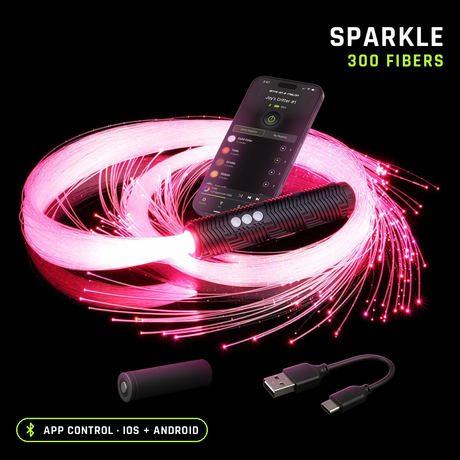
Fiber comes in two personalities. End Glow carries light cleanly down the strand and delivers the most saturated color at the fiber tips — crisp points of color at the end of every strand. Sparkle leaks light along its length, turning the whole garment into a twinkling starfield. Costumes are the one place both shine: garments see low impact compared to spun props, so Sparkle's fragility matters much less here. We break the tradeoffs down fully in End Glow vs Sparkle.
The light engine: where most costumes fall short
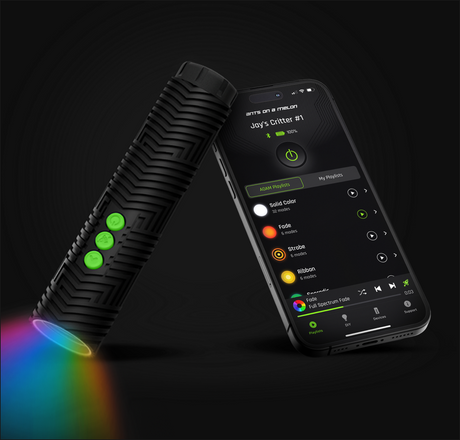
Every fiber costume is only as bright as the light pushing into the bundle. Most ready-made and DIY setups run on small coin-cell or USB battery packs with preset colors, which is why so many glow outfits vanish under festival lighting. Our kit takes a different approach: the light engine is the RGB Critter BT, a full 170-lumen app-controlled flashlight with 16.7 million colors, 145+ modes, and unlimited custom playlists over Bluetooth from iOS or Android (it works without the app too). USB-C charging, up to 7 hours of runtime, and a swappable 18650 battery. Because it is a real flashlight rather than a coin-cell pack, the fibers actually read from across a festival.
Three ways to get one
Path 1: a fiber kit in your own garment (what we make)
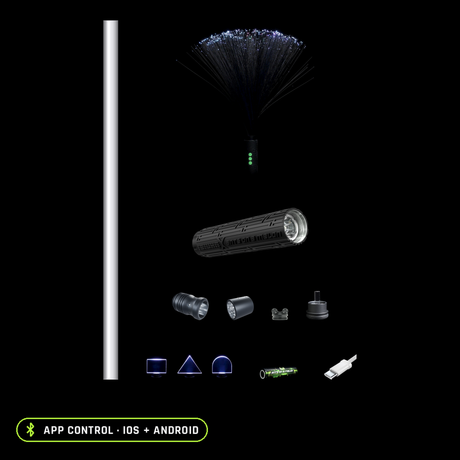
The Fiber Optic Costume Kit ($189.95 to $259.95) pairs a bundle of 360 or 500 fibers, in lengths from 6 to 12 feet, with the RGB Critter BT as the light engine. Fibers come in End Glow or Sparkle at the same price, and you attach them to a garment you already own or make. Most light output, most control, reusable across outfits — and when the night ends, the light twists out and powers a BitWhip or 200+ other tools.
Path 2: a ready-made light-up garment
If you want a finished piece sewn by professionals, buy from the apparel specialists: TrYptiX Fashion (festival and Burning Man fashion), Lumisonata (fiber optic fabric clothing), Your Mind Your World (light-up festival wear, a decade in), and independent makers on Etsy. This is the right call when fit and finish matter more than raw glow, or when you simply do not want a project. Tradeoffs: the light engines are usually small battery packs with limited colors and brightness, the electronics are sewn in (harder to service), and the garment is the garment — it will not power next year's different costume.
Path 3: full DIY from raw materials
Raw end-glow fiber, mesh light panels, and coin-cell or USB battery controllers from marketplaces are the cheapest way to experiment, and for small accents (a hat band, a trim line) they are honestly fine. For a whole outfit, expect dim output, fragile connectors, and a rebuild by the third festival. If you go this road, our DIY guide still applies, and a Critter-powered bundle can always replace the weak light engine later.
Side by side
| AOAM Costume Kit | Ready-made garment | Raw DIY | |
|---|---|---|---|
| Price | $189.95 to $259.95 | Varies widely; quality pieces often cost more | Cheapest to start |
| Light output | Full flashlight engine, brightest option | Small sewn-in packs | Weakest |
| Color control | 16.7 million colors, app + buttons | Usually preset colors | Usually preset |
| Effort | An afternoon of attaching | None | The most |
| Reusable | Yes: fibers re-mount, light powers 200+ tools | The one garment | Partly |
| Runtime | Up to 7 hours, USB-C, swappable battery | Varies | Varies |
| Warranty | 2 years, lifetime upgrade available | Varies by maker | None |
Building one: an afternoon, not an engineering degree
Attaching fibers to a garment is a real craft project, but a friendly one. The short version:
- Pick the garment. Coats, dresses, cloaks, umbrellas, and wigs all work — anything with seams or structure to route fibers along.
- Choose your fiber. End Glow for saturated tips, Sparkle for a full-length starfield. Costumes see low impact, so either holds up here.
- Anchor the light. Mount it at a pocket, belt, or harness point so the bundle has a stable home and you can reach the controls.
- Run the bundle along seams. Seams hide the routing and spread the strands evenly across the garment.
- Secure the strands. Fabric loops, thread tacks, or clear tape on the inside face hold fibers without kinking them.
- Care for it. Remove the light before any washing, hand-wash gently, and never machine-wash with the fiber bundle attached.
Our DIY fiber optic costume guide walks through layouts for coats, dresses, and umbrellas, and artist Aiman Akhtar's 3D-printed costume build shows how far the idea stretches.
Where fiber optic costumes shine
Festivals and Burning Man
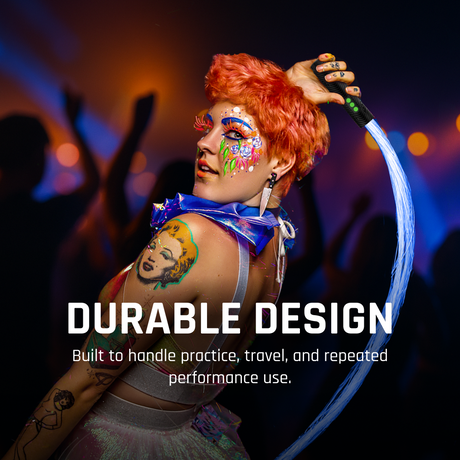
This is the natural habitat. A full flashlight engine means the costume reads from across a festival instead of disappearing under stage lighting, and a spare battery in your pocket covers a full night.
Weddings and themed events
Phone-controlled color is the quiet superpower here: the same costume can match a wedding palette one weekend and a camp theme the next, without touching a single fiber.
Costumes that become a kit
Because the light twists out, the costume is also a doorway: the same RGB Critter BT that runs your outfit powers a BitWhip and 200+ other twist-on tools when the garment is hanging in the closet.
Gear you'll want
The full glowing-outfit package
$189.95 to $259.95: 360 or 500 fibers, 6 to 12 feet, End Glow or Sparkle at the same price, light included.
The light engine on its own
The removable, app-controlled core that also powers 200+ twist-on tools.
Fiber optic costume FAQ
How do I attach fiber optics to clothing?
Anchor the light at a pocket, belt, or harness point, run the bundle along seams, and secure strands with fabric loops, thread tacks, or clear tape on the inside face. Our DIY guide covers layouts for coats, dresses, and umbrellas.
Can I wash a fiber optic costume?
Remove the light first, always. With the electronics out, hand-wash gently and avoid kinking or creasing the fibers; never machine-wash with the fiber bundle attached.
How long does the battery last?
The RGB Critter BT runs up to 7 hours on a charge, charges over USB-C, and takes a swappable 18650 battery, so a spare in your pocket covers a full night.
Should I pick End Glow or Sparkle fiber for a costume?
Costumes are the one place both shine: Sparkle turns the whole garment into a twinkling starfield, End Glow gives the most saturated color at the fiber tips. Costumes see low impact, so Sparkle's fragility matters less here. Full comparison: End Glow vs Sparkle.
Is a kit or a ready-made costume better for Burning Man or a wedding?
Ready-made if you want a finished tailored piece with zero assembly. The kit if you want maximum brightness, phone-controlled color that can match a wedding palette or a camp theme, and a light you will reuse for years.